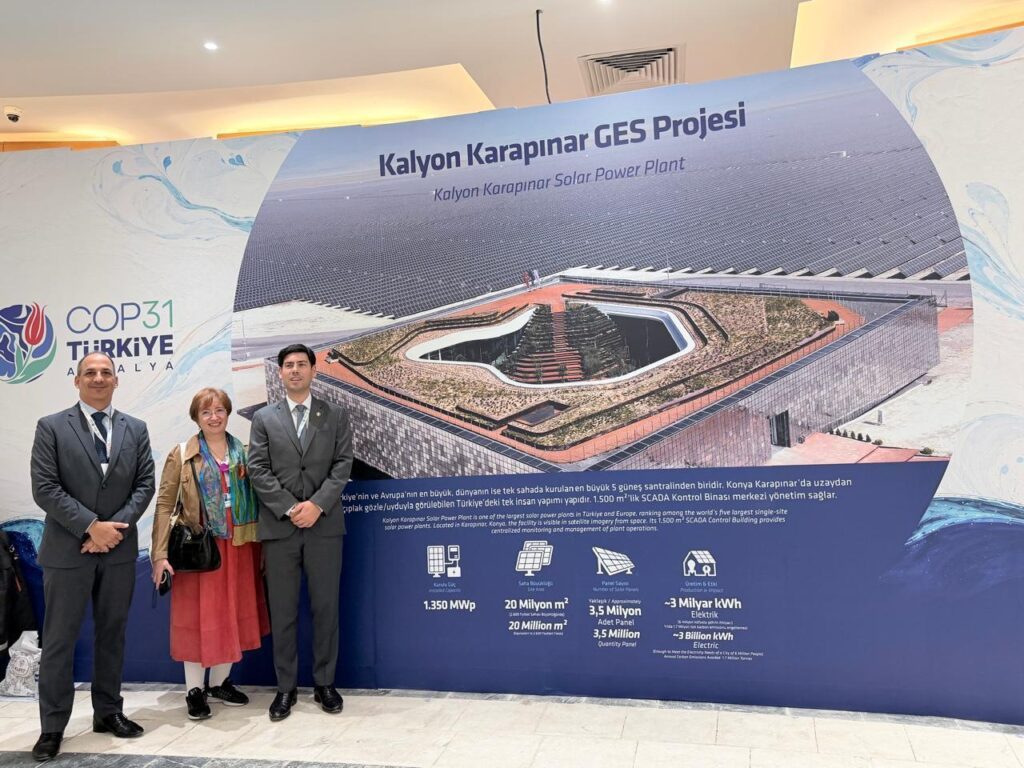
Carbon credits certified by Cercarbono will offset the emissions of COP31, through Kalyon Holding, the conference’s official Carbon Offsetting Partner. Here is the story behind those credits, and what it takes for a carbon credit to earn a place at a COP.
Every year, the UN climate conference brings tens of thousands of people together to negotiate the future of climate action. Hosting them has a footprint of its own: flights, venues, energy and logistics all add up.
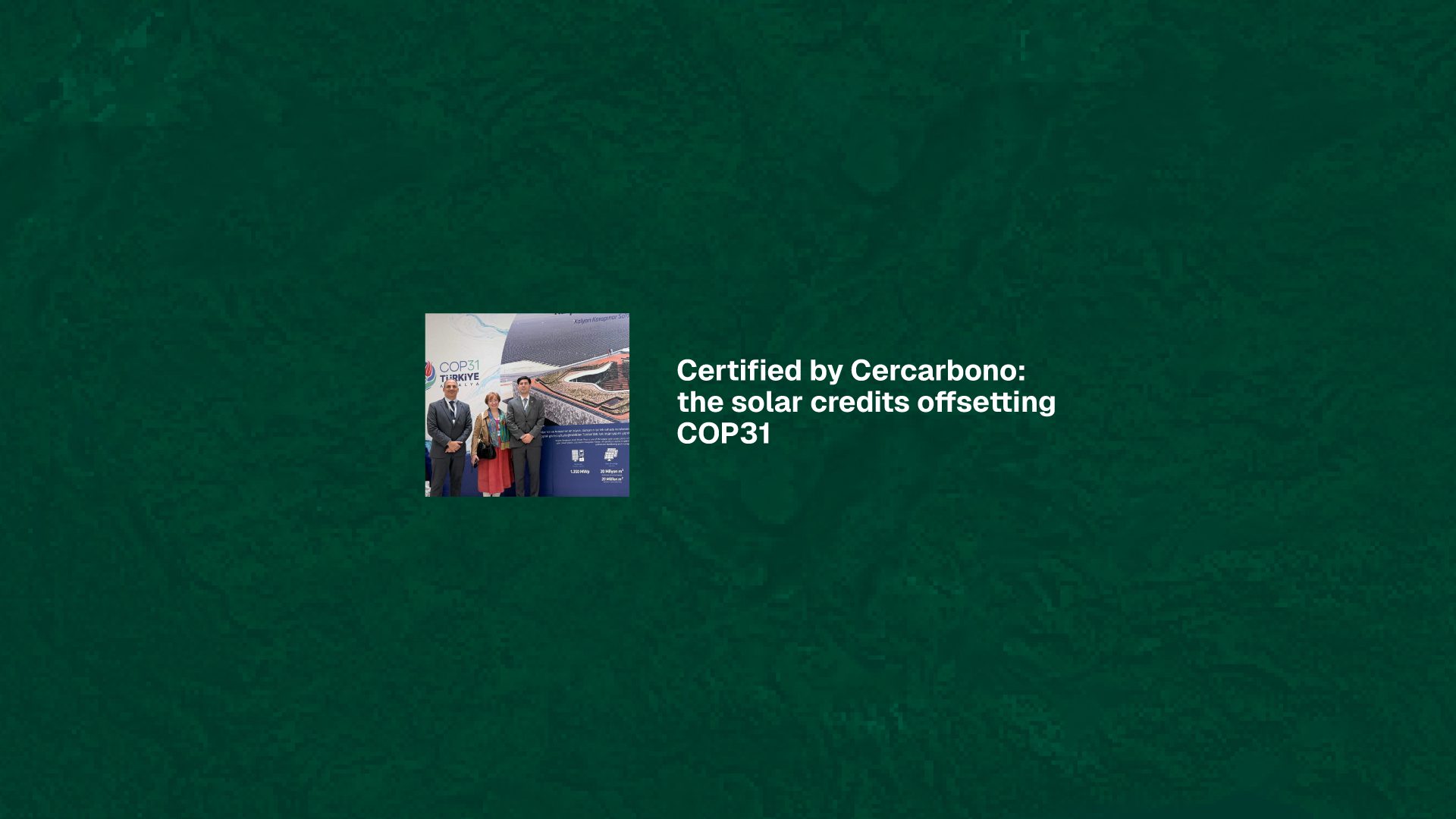
For COP31, held in Antalya from 9 to 20 November 2026, those emissions will be offset with carbon credits certified by Cercarbono. The credits come from the Karapınar YEKA Solar Power Plant, a project in the host country itself, and will be used by Kalyon Holding, whom Türkiye’s COP Presidency welcomed as the conference’s Carbon Offsetting Partner.
For our team, this is a very special moment. Credits certified by Cercarbono have been chosen to support the climate gathering of the year.
A certified carbon credit is the result of several independent organisations each playing a defined role. In the case of Karapınar, the chain looks like this.
| Role | Organisation | What they do |
| Carbon Offsetting Partner of COP31 | Kalyon Holding | Uses the credits to offset the conference’s emissions |
| Project owner | Kalyon Güneş Enerjisi Üretim A.Ş., part of Kalyon Holding | Built and operates the solar plant |
| Project developer | Ekobil Environmental Services and Consultancy Ltd. | Prepared the project documentation and led it through certification |
| Validation and verification body | 4K Earth Science Private Limited | Independently audited the project, including an in-person site visit |
| Certification programme | Cercarbono | Reviewed the project against its protocol, certified it and issued the credits |
| Registry | EcoRegistry | Records every credit, from issuance to retirement, so each one can be traced |
This separation of roles is what makes a credit trustworthy. The organisation that audits a project is independent from the one that develops it, and the programme that certifies it sets the rules that both must follow.
A first for solar energy in Türkiye
The Karapınar YEKA Solar Power Plant covers 19.2 km² in the Karapınar district of Konya, in Central Anatolia. With a licensed capacity of 1,000 MWe and more than 3.2 million panels, it is expected to generate about 2.7 million MWh of clean electricity a year, enough for roughly 2 million people.
When it began operating in 2020, the plant had no precedent in the country. Licensed solar installations in Türkiye were generally below 50 MWe, and the renewable plants of a comparable size were all hydropower. Karapınar also brought a combination of technologies that was new at this scale in Türkiye: bifacial modules, which capture sunlight reflected from the ground as well as direct light, mounted on single-axis trackers that follow the sun across the sky.
That pioneering character was central to its certification. The project was assessed as first of its kind in the country, a finding confirmed by the independent validation and verification body and reviewed by Cercarbono.
The climate impact is tangible. Each megawatt-hour the plant delivers replaces electricity from a grid still largely powered by fossil fuels. Over its 10-year crediting period, from 2020 to 2030, the project is expected to reduce around 17.6 million tonnes of CO₂e.
The project’s benefits reach the communities around it. A Social Development Programme supports households in the five villages closest to the site. Since 2023, local herders have been able to graze flocks of up to 600 sheep under the panels, keeping the land productive. A biodiversity management plan aims for a net positive impact on local flora and fauna, and 773 workers have completed vocational training through the Karapınar Public Education Centre. The project contributes to four UN Sustainable Development Goals: SDG 7, 8, 11 and 13.
From sunlight to certified credit
Before a single credit from Karapınar could be used, the project went through several stages.
- Project design. The developer documented the project, its baseline and how emission reductions would be measured, following the ACM0002 methodology for grid-connected renewable electricity.
- Independent validation and verification. 4K Earth Science Private Limited audited the project, including an in-person site visit, and verified its emission reductions for the period from September 2020 to September 2023.
- Certification. Cercarbono reviewed the full documentation against its Protocol for Voluntary Carbon Certification (version 4.2) and certified the project.
- Issuance. In March 2024, Cercarbono issued 2,955,365 CARBONCERs, each equivalent to one tonne of CO₂e.
- Registry and retirement. Every credit is recorded on EcoRegistry with a unique serial number. When credits are used to offset emissions, they are retired so they can never be used again.
“This is a very special moment for everyone at Cercarbono. Seeing credits we certified chosen by Kalyon to offset the emissions of COP31, the most important climate gathering of the year, is a recognition of years of work by our team to build a standard that markets can trust. It is also deeply meaningful that these credits come from a clean energy project in the host country itself,” said Alex Saer, CEO of Cercarbono.
COP31 is about turning climate commitments into action. Seeing a project certified by Cercarbono play a part in that, through Kalyon’s role as Carbon Offsetting Partner, is a milestone we are proud to share.
Explore the project on EcoRegistry under CDC-126.